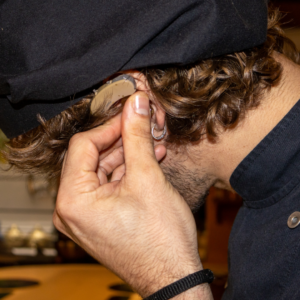

It is common knowledge that ears detect sound, yet the central nervous system is what truly allows us to hear. Your ears collect sound, but your brain interprets it, turning vibrations into words, meaning, and memories.
As hearing loss diminishes input, the brain struggles to maintain a high-fidelity connection to the environment. This reduction in stimulus creates a “bottleneck” that forces the brain to sacrifice cognitive resources to process speech.
The good news is that modern hearing aids do much more than amplify sound. These devices re-establish high-frequency inputs, ensuring the brain maintains its neuroplastic engagement with the world.
This overview is designed for individuals ready to explore professional hearing rehabilitation. Below, we’re going to talk about how advanced hearing aids can support both hearing and brain health, and how taking action early can make all the difference.
The Auditory-Cognitive Partnership: A Biological Overview
Hearing is a complex partnership between the ears and the brain.
Vibrations move through the ear canal, causing the tympanic membrane to oscillate. The middle ear bones relay this energy to the hair cells of the inner ear, which translate movement into bio-electrical data.
These signals then travel along the auditory nerve to the brain. Once the brain receives them, it performs several critical tasks:
- Extracting words from raw noise
- Managing the signal-to-noise ratio to isolate speakers
- Interpreting tone, emotion, and meaning
- Mapping auditory input to existing linguistic frameworks and memories
In other words, hearing involves significant cognitive processing, not just physical sound detection.
How the Brain Compensates for Unmanaged Hearing Loss
An unmanaged auditory deficit triggers a massive increase in cognitive load for the brain.
Reduced Neural Stimulation
The brain’s auditory centers require consistent input to maintain structural integrity, or the neural pathways will eventually degrade. Permanent changes in the brain can occur if the auditory pathways remain inactive for too long.
The Link Between Hearing and Dementia Risk
Statistically, seniors with untreated hearing issues show a higher rate of cognitive decline than those with treated hearing. The brain essentially “steals” energy from the frontal lobe to help the auditory cortex manage a degraded signal.
How Hearing Loss Influences Emotional Well-being
Difficulty hearing inevitably impacts social connectivity, causing many to withdraw from situations that were once enjoyable. Long-term social retreat is known to accelerate brain aging and increase the risk of depression and chronic loneliness.
The Role of Digital Aids in Auditory Rehabilitation
The latest devices are engineered to restore the natural nuances of sound, delivering a cleaner signal for the brain to process.
How Clarity Drives Brain Engagement
Digital devices fill in the specific “frequency gaps” created by sensorineural damage. A fuller signal ensures the brain’s language centers can operate at peak efficiency and speed.
How Better Hearing Protects Brain Resources
Without hearing aids, the brain often has to fill in missing pieces of speech. This constant “guessing” can be mentally exhausting. These devices act as a “neural filter,” letting the brain process information with far less daily strain.
How Hearing Aids Free Up Brain Power for Focus
With lower listening effort, the brain’s executive functions can return to their primary tasks of focus and storage.
The Link Between Hearing Aids and Brain Health
Scientific studies indicate that managing hearing through technology is a cornerstone of cognitive preservation as we age.
This benefit is largely driven by neuroplasticity—the brain’s inherent capacity for structural and functional reorganization. Technology ensures the brain stays “plugged in” to its environment, preventing the atrophy associated with auditory deprivation.
The Importance of Prompt Intervention
Waiting too long to treat hearing loss can increase mental strain during conversations and reduce stimulation to the brain’s auditory centers.
Conversely, proactive care ensures the brain never enters a state of deep deprivation, preserving its functional clarity. Acclimation to new technology is significantly faster for those who treat their loss before it becomes profound.
Are You a Candidate for Cognitive Support Through Hearing Aids?
Hearing aids can help a wide range of people, especially:
- Anyone over the age of fifty seeking to protect their brain health
- Patients who report poor speech discrimination in loud settings
- Those who perceive a high level of effort during daily talk
- Anyone noticing a decline in their ability to track rapid speech
If these experiences sound familiar, a hearing evaluation can help determine whether hearing aids could improve your hearing clarity and cognitive comfort.
FAQs About Hearing Aids and Brain Health
Can Hearing Aids Stop Cognitive Decline?
Hearing aids do not prevent dementia, but research suggests that treating hearing loss may help reduce cognitive strain and support long-term brain health.
The Timeline for Neural Adaptation to Hearing Aids
The brain generally completes its primary “re-learning” phase within a few months, gradually waking up to forgotten sound data.
Do Hearing Aids Boost Your Recall Ability?
They support memory by ensuring your brain isn’t too exhausted by the act of listening to actually retain what was said.
The Final Word on Auditory and Cognitive Wellness
Protecting your ears is one of the smartest things you can do for your mind, allowing for comfortable speech processing and sustained social life.
If you are ready to explore the intersection of hearing and cognition, we are here to guide you. Contact our office now.