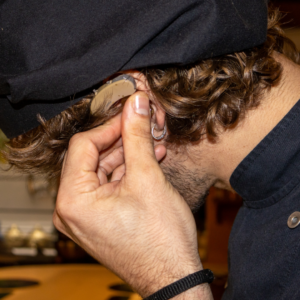

While common perception dictates that hearing is strictly an otological process, this represents only a fraction of the truth. But hearing is just as much a brain function as it is an ear function.
Cognitive hearing refers to the specific neural capacity to decode and assign meaning to the acoustic signals captured by the ears. For instance, a patient may possess perfect physical hearing yet remain unable to decipher the intent behind a spoken sentence. Understanding the nuance between hearing a noise and comprehending a thought is essential to defining cognitive hearing.
What Is Cognitive Hearing?
Cognitive hearing involves the brain’s role in processing speech and meaning. After sound waves pass through the cochlea, they are sent via the auditory nerve to the brain to be synthesized into language.
Successful sound interpretation requires the synergy of multiple executive functions, including:
- Attentional Control
- Working memory
- Neural Processing Velocity
- Central Inhibitory Control
Efficiency in these neural systems results in the perception of clear and easy speech comprehension. When these functions are compromised, the brain struggles to isolate voices from competing ambient noise.
Defining Central Auditory Processing Deficits
Cognitive hearing loss is defined as a deficit in the brain’s ability to organize and understand acoustic data. Even if the ears detect the sound, the brain may have difficulty organizing, interpreting, or remembering what was heard.
While this can be a standalone diagnosis, it frequently overlaps with traditional sensorineural hearing loss. Neural processing issues are frequently observed in elderly patients, though they are not an inescapable part of the aging process.
Recognizing the Red Flags of Neural Auditory Decline
Clinicians must note that the onset of brain-based hearing issues is often characterized by very slight shifts in behavior.
Common signs include:
- Challenges with auditory foreground/background separation
- Short-term retention deficits for verbal instructions
- Noticeable pauses before answering simple questions
- Increased listening fatigue by the end of the day
Numerous patients report a sense of profound mental exhaustion following social interactions, despite maintaining the ability to perceive acoustic signals. Admittedly, this specific symptom of exhaustion is not a standalone proof of auditory decline. Should this exhaustion coexist with other processing challenges, it likely points toward cognitive hearing loss.
The Link Between Sound Clarity and Cognitive Performance
When sound clarity diminishes, the auditory cortex is forced to compensate by “guessing” at missed phonemes. This heightened auditory effort often steals neural energy from the centers responsible for storage and understanding.
If the auditory system remains compromised, it may eventually lead to:
- Systemic Reductions in Mental Agility
- Memory challenges
- Avoidance of social events to mitigate listening fatigue
Fortunately, addressing hearing concerns early helps reduce this cognitive load and supports overall brain health.
The Role of Professional Care in Reducing Cognitive Load
Absolutely. Clinical intervention is highly effective at lowering the neurological energy spent on listening. By delivering a high-fidelity signal, hearing aids relieve the auditory cortex of the burden of reconstruction.
Improved auditory input allows neural resources to return to their primary roles in memory and analysis. Investing in thorough hearing treatment directly correlates with improved clarity and reduced neural work.
Identifying Processing Deficits: Why Early Action Matters
If you notice that decoding language requires more effort than before, seek an expert review.
Modern evaluation techniques for cognitive hearing often feature:
- Complete Diagnostic Hearing Assessments
- Speech Perception Tests in Challenging Environments
- Neurological Baseline Screenings
Testing the signal-to-noise ratio (SNR) is essential for detecting processing hurdles that quiet environments fail to trigger. A prompt evaluation ensures that a patient receives a targeted strategy to maintain high-level cognitive and auditory performance.
Expert Answers to Your Questions on Cognitive Hearing
Cognitive Hearing Loss vs. Cognitive Decline: What You Need to Know
No. Cognitive hearing loss refers specifically to the brain’s difficulty processing sound. Although long-term auditory deprivation is a known risk factor for broader decline, the two pathologies are distinct.
How Hearing Technology Supports Attentional Control
Absolutely. Reducing the “mental work” of listening allows the brain to redirect its resources toward sustained attention.
Standard Procedures for Evaluating Auditory Processing Capacity
A professional review generally combines traditional sensitivity testing with modern auditory-processing evaluations. In some cases, cognitive screening tools may be used to better understand processing challenges.
Reclaiming Clarity: Begin Your Auditory Health Journey
When conversations become a source of mental strain, seeking a formal evaluation is essential for long-term neural maintenance. Call our office to book a consultation today. Early treatment makes a difference not just for your hearing, but for your overall quality of life as well.