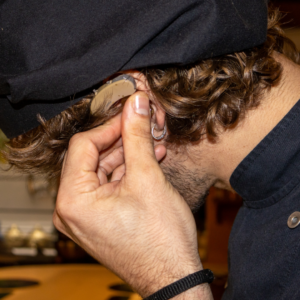

It is a well-documented biological fact that dogs with long, floppy ears do not capture directional sound waves as efficiently as pointed-ear breeds. It’s probably not surprising to learn that cats, dogs, and hamsters have the ability to adjust the direction of their ears to enhance their ability to pick up sounds from the front, sides, or rear.
Our furry friends aren’t the only ones whose ears impact the way they hear. The human ear has similar features, and it can vary from person to person.
We will take a closer look at the ways your outer ear geometry impacts cognitive processing and outline how this research will advance specialized hearing loss treatments in the decade ahead.
The Biology of the Auricle: How Form Follows Sensory Function
From a structural standpoint, the outer ear comprises the visible, superficial flap that most people simply refer to as the ear. This physical sound-capturing structure is scientifically defined as the “auricle” or the “pinna.” Furthermore, the outer ear category extends to encompass the external auditory canal, which channels acoustic energy directly toward the middle ear space.
We have all been taught since introductory childhood biology that the deep inner ear is the precise site where neurological hearing occurs. For example, an individual’s auricle could be completely severed in a traumatic impact, but if the canal remains open and the middle and inner ears operate properly, acoustic perception remains.
Relying on that classic logic, a patient might choose to undergo elective plastic surgery to alter their ear prominence or shape. Historically, it was widely believed that pinning back the ears did not change daily hearing performance in the absolute least.
Does this clinical narrative render the visible auricle one of the most redundant components of human anatomy? Is its biological utility restricted entirely to passively funneling passing sound waves down into the ear canal? Or is its true sensory function infinitely more subtle, representing an incredibly important component of spatial awareness?
A collection of elite sensory scientists became intensely curious about these structural folds. They started asking unconventional questions that traditional audiology had long ignored. Within the scientific community, this precise intersection of curiosity and inquiry is exactly where breakthrough discoveries occur. This is exactly the type of breakthrough that just occurred concerning the auricle portion of your outer ear.
What Neuroscientists Discovered About the Pinna
It is already a basic scientific fact that human brains map out horizontal audio sources based on which side the sound pressure hits first. A person with two fully functioning ears can usually quickly determine if a sound came from the left or right. But what physiological purpose is served by the highly complex, asymmetrical topography of your unique auricle?
To discover the mechanism, neuroscientists designed a study that temporarily deformed the outer ear shape of their participants. To modify the anatomy, they nested a flexible silicone filler into the structural grooves of the auricle, leaving the ear canal completely open. Clogging the deep canal would have been incredibly dangerous to the patient’s tympanic membrane.
When they did so, they found that people could still tell the direction the sound came from, but they couldn’t tell if the sound came from above their head or under the furniture.
In an instant, the experiment had effectively deactivated a previously unrecognized, highly sophisticated component of the human ear’s spatial geolocation system.
Behind the Science: How the Outer Ear Molds Confused the Brain
Scientists use an fMRI machine to measure brain activity. Prior to any anatomical modification, subjects listened to a series of randomized audio cues to establish an absolute control baseline of how their brains responded while locating sounds.
The resulting fMRI data revealed a fascinating pattern: specific neural clusters fired with a rapid frequency when a sound originated from a low coordinate, but shifted to a slower firing rate when the sound source was positioned above them.
After the cartilage valleys were completely masked by the silicone molds, the team asked the participants to pinpoint the origin of the sounds once more. The results were definitive: overwhelmingly, the study participants could no longer determine the vertical location. They systematically miscalculated the vertical plane, mistaking high-frequency overhead sounds for low-level floor sounds, and vice versa. The corresponding neural clusters were firing in a random, disorganized frenzy—behaving as if completely confused by the lack of acoustic reflection.
To study neural plasticity, researchers instructed the subjects to wear the silicone ear molds continuously for seven days before returning to the lab for a secondary round of testing. Interestingly, their geo-location system had adjusted and could again tell where sounds were coming from. This data established that minor changes to your outer ear geometry can completely rewrite your physical ability to hear and map your environment.
Once the researchers safely removed the silicone inserts, their neuro-auditory tracking centers immediately returned to normal operating parameters.
This research beautifully illustrates that the miracle of hearing is much larger than sound waves simply traveling down a canal to hit your eardrum on their way to the deep cochlea. The way sound bounces across your outer ear ridges provides the brain with a rich stream of localized data about the sound source that had previously remained completely unknown to medical science.
How This Outer Ear Discovery Is Redefining Audiological Medicine
Traditional medical training dictates that our primary hearing thresholds and coordinated balance rely heavily on the inner ear chambers. This research provides a critical missing puzzle piece, explaining how the individual parts of our ears work together as a team to understand what we’re hearing. Using this spatial data as a guide, dedicated hearing professionals are confident they can pioneer new and improved avenues to treat hearing loss. The engineering driving modern hearing aid technology has advanced to an astonishing degree over just the past 10 to 20 years.
As we continue to decode these advanced anatomical interactions, we will possess the tools to make each patient’s custom hearing aid experience even better.