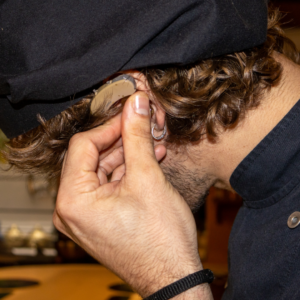

Patients researching therapeutic sound amplification often find that the initial acquisition expense stands out immediately. Based on the sophistication of the digital signal processing and the required audiometric programming, these devices span a wide pricing spectrum. Such a capital requirement often surprises families, leading them to prematurely halt their pursuit of better auditory health.
The sticker price is a real metric, yet it rarely reflects the actual net expenditure for the patient. Most individuals fail to recognize that the initial quote is infrequently the true financial burden after adjustments. A combination of third-party coverage, pre-tax medical accounts, and medical credit lines can significantly offset or defer the expense.
We provide this breakdown of available funding avenues to empower your decision-making before your consultation, optimizing your path to enhanced sound localization.
Evaluating Third-Party Payer Coverage for Auditory Rehabilitation
Before assuming you’ll be paying completely out of pocket, start with your insurance.
For individuals holding commercial or corporate group health policies, benefit structures for otologic devices are highly inconsistent. Some plans cover a portion, while others offer a fixed allowance. On the other hand, some don’t include hearing aids at all. For exact details, communicate directly with your policy’s member services department regarding durable medical equipment clauses. Inquire specifically about monetary caps, whether real-ear measurements and fittings are covered, and your preferred provider network status.
When navigating public health options, recognize that traditional federal Medicare components do not subsidize these devices. However, many Medicare Advantage (Part C) plans do include hearing benefits, usually as a set yearly allowance.
For patients utilizing state-administered Medicaid, the availability of auditory benefits is determined strictly by state law. Some programs provide hearing aid benefits for qualifying adults, so it’s worth checking or asking your provider for guidance.
Maximizing Health Savings and Flexible Spending Accounts for Otologic Technology
Individuals contributing to an HSA or FSA possess a specialized tax-mitigation tool perfectly suited for audiological procurement.
Because the IRS classifies hearing aids as a qualified medical expense, you can deploy pre-tax assets for their purchase. This statutory exemption provides an immediate discount equivalent to your marginal tax bracket. To illustrate, a patient in the 22% federal tax tier purchasing a $2,000 system reduces their real economic impact to approximately $1,560. It is vital to distinguish between persistent HSA balances and time-delimited FSA funds that vanish at year-end. Therefore, coordinating your audiology care with your annual FSA deadline ensures no assets are wasted! Because both prescription and select over-the-counter options meet the criteria, assessing your available balance is an excellent pre-appointment step.
Utilizing Patient Financing Programs to Defer Auditory Technology Costs
Most established audiology centers provide entry points to dedicated consumer medical credit lines, eliminating the need for total upfront liquidation. Such specialized medical credit instruments, including CareCredit, commonly offer deferred-interest terms for designated durations. Consequently, patients are empowered to select the appropriate level of technological sophistication rather than compromising on their clinical needs.
Integrating payment plans into your treatment discussion is a routine and professional practice. If budgetary constraints are a factor in your decision-making, ensure you communicate this to your provider. Recognize that these corporate and clinical credit options are deliberately positioned to bridge the affordability gap! The medical community firmly believes that securing vital sensory rehabilitation should never require severe financial disruption.
Veterans: Your Hearing Benefits May Be Greater Than You Think
Hearing loss is one of the most common service-related conditions among veterans, and it’s important to know that the Veterans Administration (VA) offers meaningful support.
Those with verified eligibility can obtain top-tier otologic hardware with no out-of-pocket exposure via the VA health network. Even if your hearing loss isn’t officially service-connected, you may still qualify depending on your enrollment status and priority group. If you haven’t explored your VA benefits yet, it’s worth reaching out to your local VA facility or asking your provider for help navigating the process.
Exploring Philanthropic and Non-Profit Foundations for Auditory Assistance
Non-governmental organizations frequently operate dedicated programs designed to make otologic equipment accessible. Renowned non-profits like the Starkey Hearing Foundation and civic clubs like the Lions Club routinely sponsor individuals requiring acoustic aid. Some states also have hearing aid programs for low-income adults.
These programs can have eligibility requirements and waiting lists, but they’re worth exploring, especially if your insurance coverage is limited. Most of these foundations provide digital portals to screen your eligibility or initiate the formal intake procedure.
Analyzing Over-the-Counter (OTC) Hearing Options Versus Prescription Systems
Over-the-counter (OTC) hearing products represent an entry-level financial tier, generally priced between $200 and $1,000 for a dual-device configuration. These non-prescription units are legally cleared to assist adult individuals exhibiting self-perceived mild-to-moderate situational hearing deficits.
Yet, without the intervention of an expert to customize the acoustic programming, many users fail to achieve adequate speech intelligibility. In cases of advanced sensory impairment, prescription hardware calibrated to a precise audiogram is mandatory for successful rehabilitation.
Rather than purchasing an OTC model out of economic necessity, investing in a professional evaluation establishes your true baseline needs. Retail devices function adequately as a temporary placeholder while awaiting insurance pre-authorization or institutional grant approvals. They deliver a satisfactory temporary compromise, but remain structurally inferior to custom clinical systems over an extended timeline.
Partnering with Our Clinic to Navigate Auditory Technology Financing
Our clinical team specializes in managing financial procurement and insurance coordination on a daily basis. The available matrix of alternative funding mechanisms is frequently broader than patients anticipate.
Bring your insurance information to your appointment, and we’ll walk you through what’s available, what’s covered, and how to make it work for your budget. Reach out to our administrative staff now to reserve your diagnostic evaluation and begin your hearing assessment. We look forward to delivering the accurate answers and balanced payment options necessary to restore your connection to the world.